

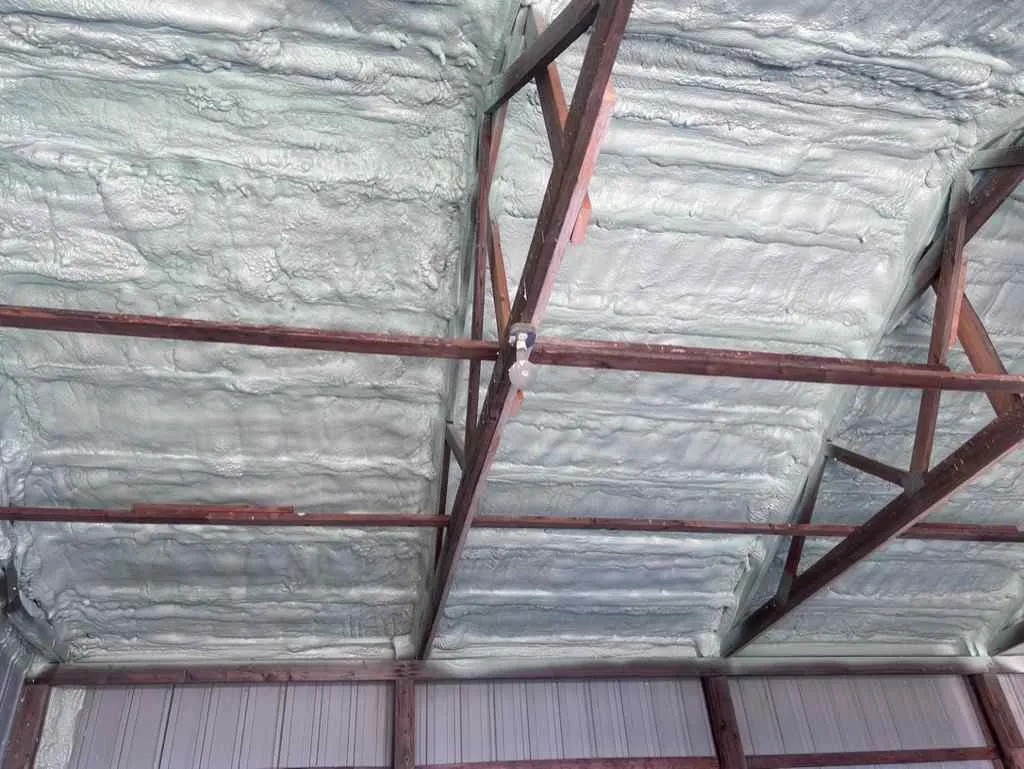
Spray foam insulation improves HVAC system efficiency by turning your home’s envelope into a true air barrier, which cuts the heating and cooling load your equipment fights against every day. Rather than only slowing heat the way fiberglass or cellulose does, spray foam expands into gaps, cracks, and cavities to stop the air leakage that keeps furnaces, heat pumps, and air conditioners running long, wasteful cycles. For homeowners and builders in Vancouver, WA and across Southwest Washington, pairing spray foam with a well-maintained HVAC system typically means steadier temperatures, better humidity control, and less wear on equipment. The right approach depends on your goals and structure: open-cell foam suits interior walls and sound control, closed-cell foam delivers higher R-value per inch with moisture resistance, and attic or crawl space applications tend to produce the largest HVAC payoff. The sections below break down the mechanics, the data, and the decisions that make the difference.
Your HVAC system is sized and designed to hold a set temperature against a predictable load. When outside air pushes in through wall gaps, attic bypasses, and rim joists, the system has to condition that unplanned air on top of the space you actually occupy. Department of Energy research referenced in Wikipedia’s spray foam article puts air infiltration at the source of roughly 40% of a home’s energy loss, which explains why a “big enough” furnace or AC still runs constantly in a leaky house.
Ductwork adds a second layer of loss. ENERGY STAR reports that in a typical house, about 20 to 30 percent of conditioned air moving through the duct system escapes through leaks, holes, and disconnected joints before it ever reaches a register. When those ducts run through an unconditioned attic or crawl space, every leak pulls in hot, humid summer air or cold winter air and forces longer run cycles.
The scale of the stakes is clear from national data. The U.S. Energy Information Administration found that space heating and air conditioning made up 52% of household energy consumption in 2020. EIA also credits improved building insulation as one of the main reasons per-home energy use has declined over the past 30 years, even as homes grew larger.
Spray foam attacks inefficiency on two fronts at once, and that combination is what separates it from conventional insulation.
1. It stops convective heat transfer. Air movement carries heat out of your home in winter and into it in summer. Because spray foam expands up to 30 to 60 times its liquid volume and adheres to irregular surfaces, it fills the gaps that move that air. Wikipedia’s technical overview identifies this custom air sealing as spray foam’s most important attribute, since heat cannot escape or enter the envelope without air movement to transport it.
2. It resists conductive heat transfer at a high rate per inch. Closed-cell spray polyurethane foam delivers a long-term thermal resistance of about R-5.1 to R-6 per inch, while open-cell foam lands near R-3.8 per inch. By comparison, ENERGY STAR notes that most common insulation types such as fiberglass, cellulose, and mineral wool average about R-3 to R-3.5 per inch. That density means you reach target R-values in tighter assemblies like roof decks and rim joists where cavity depth is limited.
Together, these effects shorten run cycles, reduce temperature swings between rooms, and slow indoor humidity gain during our wet Pacific Northwest winters and occasional heat events. The result is an HVAC system that cycles less, dehumidifies better, and operates closer to its rated efficiency.
| Attribute | Open-Cell Foam | Closed-Cell Foam |
|---|---|---|
| R-value per inch | About R-3.8 | About R-5.1 to R-6 |
| Air barrier performance | Effective at 5.5 inches or more | Effective at standard installation thickness |
| Vapor barrier performance | Not by itself | Doubles as a vapor barrier at minimum thickness |
| Physical character | Soft, sponge-like, sound absorbing | Rigid, dense, adds structural strength |
| Best HVAC-related uses | Interior walls, sound control, wall cavities | Roof decks, crawl spaces, rim joists, exposed assemblies |
Open-cell foam excels where you want acoustic dampening and full cavity fill at a lower installed density. Closed-cell foam earns its keep where moisture, depth limits, or ductwork share the assembly, since it both insulates and seals against water vapor.
Not every application moves the needle equally. Prioritize in this order:
| Application Area | Why It Helps Your HVAC System | Typical Foam Choice |
|---|---|---|
| Attic floor or roof deck | Stops stack-effect losses; protects attic ducts from extreme attic temperatures | Open cell on roof decks, closed cell where moisture control matters |
| Crawl space (walls, not ceiling) | Brings ducts and floor systems inside conditioned space; cuts cold-floor complaints | Closed cell for vapor control |
| Rim joists and band boards | Seals the leakiest perimeter joint in most homes | Closed cell |
| Wall cavities and additions | Fills voids batts miss; improves whole-house airtightness | Open cell or closed cell |
| Duct chases and penetrations | Keeps supply and return air inside the system’s intended path | Either, combined with duct sealing |
One caution from ENERGY STAR’s attic guidance: if your home has fuel-burning appliances such as a gas furnace or water heater, combustion safety testing should follow any major air sealing, since tightening a home changes how those appliances draw air.
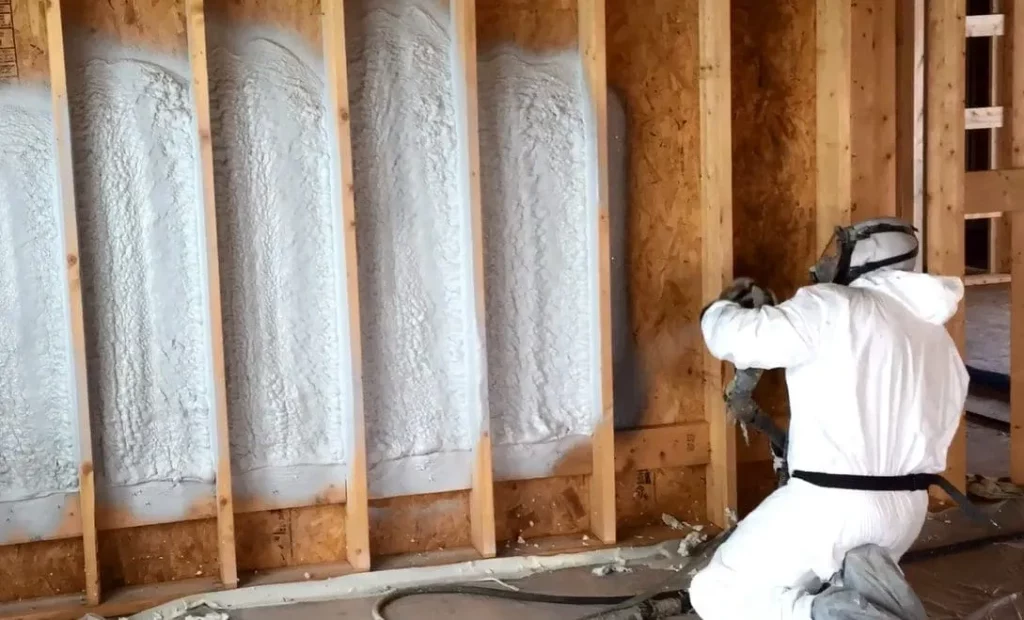
Tightening the envelope does more than lower monthly runtime. It changes the load calculation your HVAC contractor uses to size equipment. ENERGY STAR specifically recommends addressing big air leaks and duct problems before investing in replacement equipment, noting the envelope is sometimes the real source of the problem rather than the unit itself. Homes that seal and insulate first often find their existing system keeps up comfortably, or that a future insulation replacement can be sized smaller, which usually costs less to buy and to operate.
ENERGY STAR also warns that improper installation can reduce HVAC efficiency by up to 30 percent. Foam insulation cannot fix poor installation, but it removes the envelope-driven stress that shortens equipment life, and it gives a properly commissioned system the conditions it was designed for.
| Audience / Context | Recommended Approach | Key Notes | Expected Outcome |
|---|---|---|---|
| Owners of older, drafty homes | Attic air sealing plus open- or closed-cell attic insulation, then rim joists | Start where leakage is worst; verify combustion safety after sealing | Fastest comfort improvement and HVAC relief |
| New construction and additions | Closed-cell on roof decks and crawl space walls, open-cell in walls | Spray foam is an advanced application best handled by certified installers | Tight envelope with correctly sized equipment |
| Homes with HVAC in the attic or crawl space | Insulate and seal the space around the ducts, then seal duct joints | Duct sealing and insulation remain essential alongside foam | Less conditioned air lost before it reaches rooms |
| Pacific Northwest homes in Vancouver, WA | Balanced open- and closed-cell strategy matched to each assembly | Our wet climate makes vapor control a design priority | Year-round comfort with manageable humidity |
Our team at Supreme Spray Foam of Vancouver designs insulation packages around how your HVAC system actually performs, from roof decks and crawl spaces to rim joists and duct chases, and we serve homeowners and builders throughout Vancouver, WA, and Southwest Washington. If your system runs constantly, your rooms never feel even, or you are planning an equipment upgrade, we will assess your envelope first so the mechanical side has less to fight. Call us at (360) 300-5800 or email [email protected], then request a quote or schedule an insulation assessment with our crew today.
Often yes, but only after the work is verified. A tighter, better-insulated envelope lowers load calculations, so have an HVAC contractor run a new Manual J once the foam is installed.
Open cell works well on roof decks for full-depth fill and sound dampening, while closed cell is the choice where moisture control or limited depth matters. Our crew recommends the foam based on your assembly, not a one-size product pitch.
No. ENERGY STAR attributes 20 to 30 percent of duct airflow losses to leaks in a typical house, and foam on surrounding surfaces does not close those joints. Combine foam with mastic or metal-tape duct sealing for the full benefit.
Most homeowners notice shorter run cycles and more even room temperatures within the first heating or cooling season. Humidity control improvements are usually felt during the first sustained wet-weather stretch.
A well-sealed home needs planned ventilation rather than random leaks for fresh air. Our team evaluates ventilation as part of the project so indoor air quality stays healthy after the envelope is sealed.